
When the Words Don’t Come Out Right: Finding Calm in Caregiving Conversations
There was a moment, I can still picture it, when I walked out of a conversation and thought, “That did not go the way I hoped.”
I had gone in with good intentions. I had even thought through what I wanted to say ahead of time. But somewhere in the middle of it, emotions got involved, words came out sharper than I meant, and instead of feeling understood… I felt frustrated.
And honestly? A little defeated.
If you’re a caregiver, I have a feeling you’ve had a moment like that too.
Because caregiving isn’t just about the physical tasks. It’s not just about medications or appointments or making sure someone is safe.
It’s also about the conversations.
The hard ones.
The emotional ones.
The ones where you’re trying to explain what you need, ask for help, or make a decision that not everyone agrees with.
And those conversations can feel heavy.
When Conversations Feel Hard
Sometimes it’s talking with family.
You’re trying to share the load, but it feels like you’re the one carrying most of it. You want to ask for help, but you’re not sure how it will be received.
Sometimes it’s talking with doctors.
You have questions. You have concerns. But the appointment feels rushed, and later you think, “I wish I would have said something.”
And sometimes it’s talking with the person you’re caring for.
You want to be patient. You want to be kind. But emotions are high, and it’s hard to say the right thing in the moment.
So you replay it later.
You wish you had said it differently.
You wish you had stayed calmer.
You wish they had understood.
And over time, those moments can start to wear on you.
What I’ve Learned About These Moments
Here’s what I’ve learned—both in my own caregiving journey and in walking alongside other caregivers:
Most of us are not struggling because we don’t care.
We’re struggling because we care deeply and we’re trying to hold a lot at once.
Our emotions.
Their emotions.
The situation.
The responsibility.
That’s a lot to carry into a single conversation.
And when you’re already tired or stretched thin, it doesn’t take much for things to feel overwhelming.
It Doesn’t Have to Be Perfect
One of the biggest shifts for me was realizing this:
I didn’t need to have the perfect words.
I needed a simple way to approach the conversation.
Because when you have a plan, even a small one, you don’t react as much.
You can pause, take a breath.
You feel a little steadier.
A little calmer.
A little more able to say what matters.
A Few Simple Ways to Begin
If conversations have been feeling hard lately, here are a few gentle starting points:
Pause before you respond
You don’t have to answer right away. Even a small pause can help you respond instead of react.
Keep it simple
You don’t have to explain everything. Clear and simple is often more helpful than long and detailed.
Focus on what you need
It’s okay to say what you need. You don’t have to carry it all silently.
Let go of “perfect”
Not every conversation will go exactly how you want—and that’s okay. Progress matters more than perfection.
You Deserve to Be Heard Too
If you take nothing else from this, I hope you hear this:
Your voice matters.
Your needs matter.
And it’s okay to speak up with kindness and still be clear.
If you have experienced challenges in communication, I’d love to invite you to join us for the Calm Conversations: Communicating with Confidence in Caregiving workshop.
We’ll walk through simple, practical ways to:
- Stay calm in emotional moments
- Say what you need with confidence
- Make conversations feel less stressful and more productive
You don’t need perfect words. You just need a starting place. I’d love for you to join us.
Register today at www.thrivetogether.online to attend.

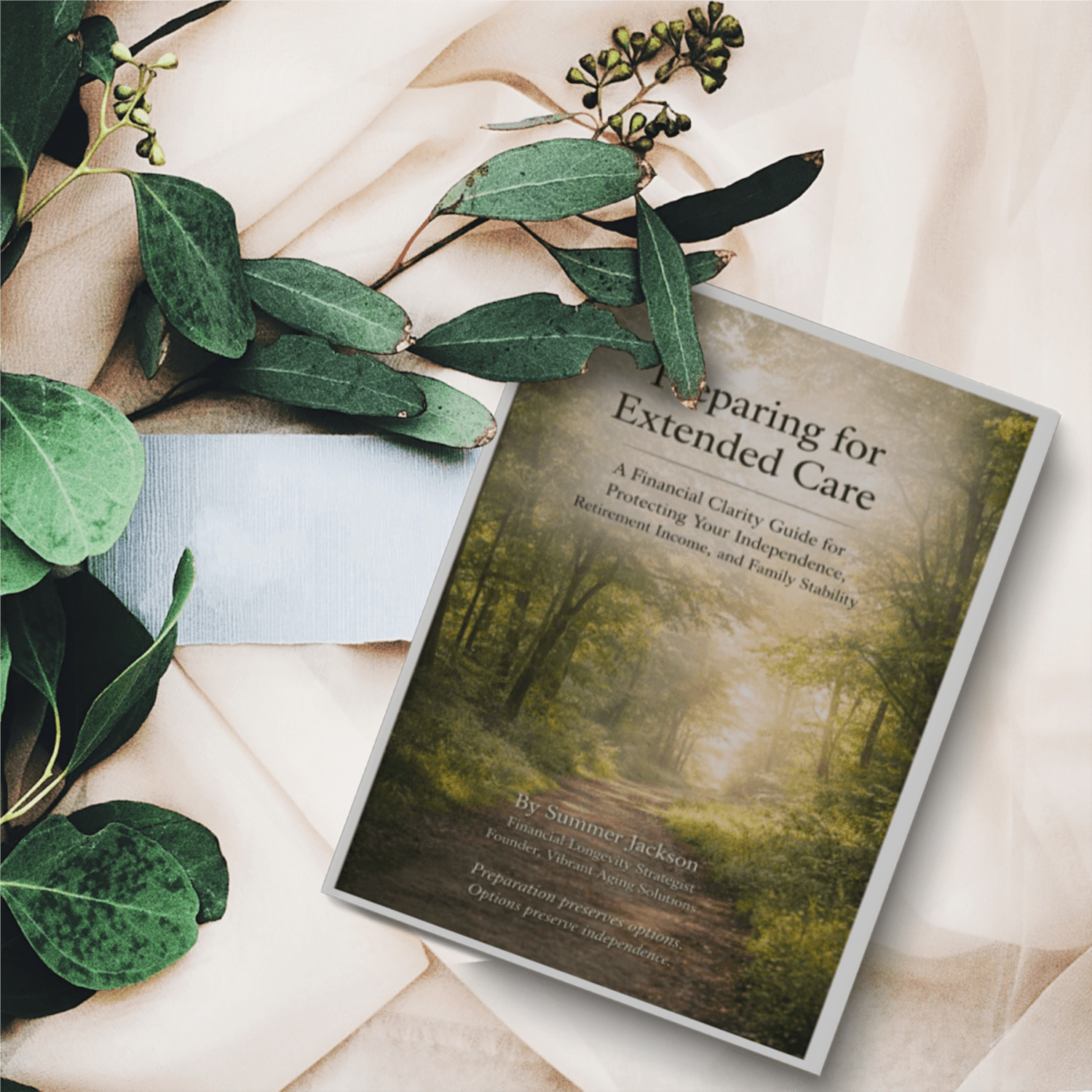
Preparing for Extent Care Guide
Many families discover that extended care planning raises important financial considerations they have never been asked to think about before.

Caring Strong Workshop Series
The Caring Strong Workshop Series offers practical, supportive sessions for family caregivers. Each workshop provides real-world tools, encouragement, and a welcoming community to help you navigate the challenges of caregiving with more confidence and less stress.